


FPL

The best team names for Fantasy Premier League
Here you’ll find a growing catalog of fun fantasy football names for the FPL – perfect...
Read More
FPL – Budget friendly attacking players 2025/2026
How to find the best value for money in the forward seats – set up as a blog post with...
Read More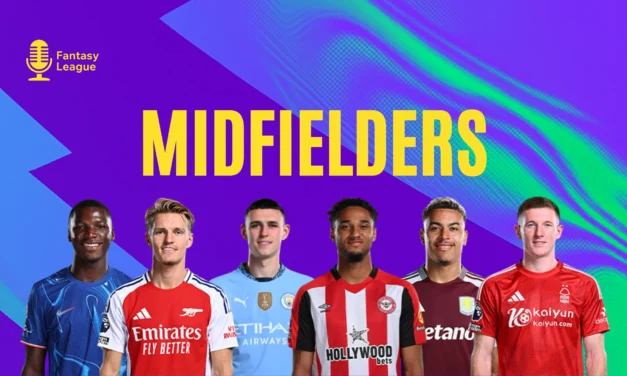
FPL – Budget-friendly Midfielders 2025/2026
The price of premium profiles means that value in midfield is key to a balanced team. New this...
Read More
FPL – Budget-friendly Defenders 2025/2026
Hitting the right budget defenders in FPL 2025/26 frees up money for the Salah/Haaland combo...
Read More
FPL – Budget-friendly Goalkeepers (2025/26)
Saving on goalkeeping frees up money for more expensive profiles in midfield/attack. The...
Read More
Chip strategy for FPL 2025/26 – how to plan your eight chips
FPL has become more strategic this year. You now have two of each chip (read more about the new...
Read More
FPL 2025/26: The new rules – explanation and strategy
The new FPL season changes the game significantly: more chips, points for defensive actions,...
Read More
Fantasy Premier League (FPL) is where football knowledge, data intuition, and a weekly dose of decision-making all collide – and the FPL category on FantasyLeague exists to make sense of that collision. Here you’ll find context that sharpens judgment, explanations that demystify jargon, and analysis that respects both numbers and nuance. This isn’t a step-by-step guide or a one-size-fits-all checklist. It’s a living hub that helps you understand the landscape: how FPL works as an ecosystem, what moves the market, why certain weeks erupt with volatility, and how the community thinks and debates. Whether you’re chasing a mini-league or studying macro trends across the season, the pages linked from this category are designed to help you leave feeling informed, confident, and ready to make your own calls.
FPL at a glance: the game behind the game
At its heart, Fantasy Premier League mirrors the drama of the real Premier League by transforming on-pitch events into points. Managers assemble squads, watch fixtures unfold, and react to the winds of form, fixtures, injuries, and price changes. But FPL is more than numbers on a screen. It is an economy of ideas, a weekly conversation about probabilities, a culture of creativity and rivalry. The FPL category on FantasyLeague pulls all of these strands together so you can follow the currents that actually move the game.
The broader ecosystem
FPL is anchored by the official game, yet its lifeblood flows through independent platforms, fan communities, podcasts, analysis threads, and social timelines. In this category we zoom out and show how those nodes connect. Team news interacts with transfer trends; fixture swings inform chip usage; underlying numbers meet the “eye test.” Understanding that ecosystem – where information originates and how it spreads – matters just as much as memorizing rules.
Why millions play – and keep playing
For some, FPL is a friendly mini-league. For others, it’s a season-long research project. The appeal is the same: the game rewards good process over time while leaving room for bold calls, differentials, and a bit of chaos. This category spotlights the patterns that repeat every year – the price cycles, the double and blank gameweek storms, the captaincy debates – so the noise becomes signal.
What you’ll find in FantasyLeague’s FPL category
Think of this category as a map to the conversations that matter. Each sub-page is written to be useful on its own, but together they form a comprehensive, people-first resource that you can revisit weekly.
Our content pillars
Team news & availability context
Injuries, suspensions, travel fatigue, and manager comments create ripple effects. We focus on context: what’s official, what remains speculative, and how uncertainty should be weighed rather than blindly followed. The goal isn’t to tell you what to do – it’s to explain what’s known, what’s likely, and what’s unknown.
Fixture landscape & schedule pressure
Fixture congestion, European involvement, and domestic cups shape minutes. Here, you’ll find plain-English explanations of how schedule factors create blank or double gameweeks, why certain teams face compressed turnarounds, and which stretches of the season tend to amplify rotation risk.
Player analysis with meaningful metrics
We translate underlying numbers – like expected goals (xG), expected assists (xA), expected goal involvement (xGI), shots in the box, big chances created – into decision-ready insights. Numbers are tools, not talismans; we show what they hint at and where they can mislead, especially when sample sizes are small or roles are changing.
Strategy think-pieces
You won’t get prescriptive “do X now.” Instead, you’ll find structured thinking: how risk and reward evolve across the season, when variance spikes, and why certain patterns (like aggressive hits during double gameweeks) historically produce wide rank swings – without insisting that one path fits all managers.
Community perspectives
FPL thrives on debate. We highlight differing viewpoints, explain common disagreements (e.g., “fixtures over form” versus “form over fixtures”), and surface questions worth asking when smart managers disagree. This section is about steel-manning the other side.
Who this category serves
- Curious newcomers who want a clear picture of what FPL is without being overwhelmed by step-by-step instructions.
- Serious managers who care about process, probabilities, and balancing data with the eye test.
- Mini-league rivals who value weekly context and want to understand the “why,” not just the “what.”
FPL terminology decoded (a jargon buster for real understanding)
Language shapes thinking. FPL terms are shorthand for ideas about risk, probability, and opportunity. This section clarifies the vocabulary so you can read analysis confidently and spot the assumptions hiding behind the acronyms.
Chips: powerful, scarce, situational
Wildcard
A full squad refresh within budget, typically used to reposition for fixture swings or navigate disruptions. In our coverage, you’ll see how fixture blocks and injury clusters influence the timing debates without pushing any one “correct” date.
Free Hit
A one-week makeover that resets to your original squad afterward. It’s often discussed in the context of blank gameweeks or awkward single-week traps. We explore the trade-offs and the opportunity costs rather than prescribing a week.
Bench Boost
Bench points count for one week. Double gameweeks often tempt this chip, but bench costs, rotation risk, and goalkeeper dynamics complicate the picture. We lay out the key variables to watch.
Triple Captain
Your captain’s points are tripled instead of doubled. Popular during double gameweeks, yet team role, fitness, and effective ownership (EO) add layers that our articles unpack carefully.
Gameweek types
Double Gameweek (DGW)
When a team plays twice in one gameweek. DGWs concentrate attention and can swing rank dramatically, but they also compress minutes and amplify rotation. Our pieces track the schedule mechanics that create DGWs and the downside scenarios people overlook.
Blank Gameweek (BGW)
When a team has no fixture in a gameweek, usually because of cup clashes. BGWs force trade-offs. We explain the origin of blanks and how they ripple into the rest of the calendar.
Statistical terms you’ll see
xG, xA, and xGI
xG (expected goals) estimates quality of chances taken; xA (expected assists) captures chance creation quality; xGI is the sum, a quick proxy for involvement. We discuss how role changes, tactical tweaks, and sample size affect their reliability.
Expected minutes (xMins)
Often more decisive than raw per-90 numbers. A player with strong per-90 stats but low expected minutes can underperform consistent starters. Our analysis makes that distinction explicit.
Heatmaps & shot locations
Where a player receives the ball and shoots gives clues about role stability. Beware of context: a new manager, a tactical shift, or injuries to teammates can relocate a player’s average position overnight.
The FPL calendar and why timing matters
Seasons have rhythms. Understanding them isn’t a guide – it’s perspective. This category outlines recurring phases so you can anticipate narratives that tend to repeat.
Pre-season
Pre-season friendlies and press conferences generate a lot of noise. The value lies in identifying new roles, penalty takers, emerging starters, and tactical templates. Our coverage separates reliable indicators from hopeful speculation.
Early weeks
Prices are volatile, and template shapes form. We look at how transfer momentum compounds and why small edges in expected minutes can snowball into big ownership swings. Articles in this phase often explore structural choices rather than individual punts.
Winter period & congestion
Fixture density, travel, weather, and squad rotation converge. Double and blank gameweeks usually germinate here. Our schedule explainers clarify how postponements and cup progress propagate through future gameweeks.
Run-in
In the closing stretch, motivations diverge: title chases, European qualification, mid-table experiments, and relegation fights all alter rotation and intensity. We spotlight how that affects FPL risk/return profiles without turning it into prescriptive advice.
Price changes & squad value: understanding the market
FPL has an internal market where player prices move. While the exact formula is proprietary, trends are observable: intense transfer activity, injury flags, and protection periods shape rises and falls. Our job is to surface the patterns, not pretend to know hidden code.
What tends to move prices
- Transfer momentum: The aggregated behavior of millions of managers can push prices up or down over short windows.
- Availability flags: Injury or suspension indicators often slow rises or accelerate drops due to reduced demand.
- Performance bursts: Sudden hauls after prime TV fixtures commonly trigger knee-jerk transfers and quick surges.
Why squad value matters – but isn’t everything
Higher squad value can increase flexibility later, yet points on the board still decide ranks. We frame the trade-off clearly: moving early to catch a rise versus waiting for more information. Articles here prioritize the concept of risk budget rather than pushing you into rushed moves.
Volatility and protection windows
Players returning from injury, new signings, or those under intense speculation can experience atypical price patterns. We document historically observed behaviors and their limits, encouraging readers to weigh uncertainty explicitly.
Captaincy and risk: reading the room without following it
Captaincy is where process meets courage. The crowd often coalesces around a standout pick, pushing effective ownership (EO) high. Going with or against that tide is a risk management decision. We break down the concepts so your decision reflects your goals and appetite for variance.
Effective ownership (EO) explained
EO measures how many points the field will likely gain from a player’s returns, adjusted for captaincy and triple-captaincy. High-EO hauls can punish those without the player; low-EO hauls reward contrarians. Our captaincy discussions use EO as a lens, not a dictator.
Template vs. differential
“Template” describes the most-owned set of players among engaged managers; “differentials” are viable, lower-owned alternatives. We examine when “different for the sake of different” is a trap, and when divergence is the rational path based on fixtures, role security, and underlying numbers.
Data in FPL: from eye test to models
Good FPL thinking integrates what you see with what you can measure. Our category pieces show how to read the tension between data and the eye test without pretending that either alone has all the answers.
Where useful data begins
- On-pitch roles: Set-piece duty, penalty responsibility, and pressing roles alter expected output.
- Team context: Tactical instructions, opponent profiling, and manager stability affect predictability.
- Workload signals: Travel, midweek minutes, and short turnarounds often shape expected minutes.
Forecasting with humility
Projections and captaincy models can be helpful if you understand assumptions: baselines, minute expectations, and regression to the mean. Our pieces explain the scaffolding behind forecasts so you can stress-test them instead of treating them as oracles.
Uncertainty and scenario ranges
We emphasize ranges, not single-point predictions. By discussing best-case and worst-case scenarios, we aim to make uncertainty visible and manageable.
FPL formats & communities
There isn’t one way to experience FPL. The official game hosts multiple formats and parallel competitions, each fostering its own micro-culture. This section situates those experiences without instructing you on what to choose.
Classic scoring & overall rank
The most common experience: cumulative points across the season. Our category content often references overall rank volatility during double gameweeks, early price swings, and late-season chip deployments, always with a focus on the underlying dynamics rather than prescriptions.
Head-to-Head leagues
Weekly matchups against one opponent inject a different kind of strategy. Luck is louder in small samples, but engagement is high and rivalries thrive. We discuss how community behavior differs in H2H without telling you how to set up your squad.
The FPL Cup
A knockout tournament layered onto the season adds drama and sudden-death stakes. Our coverage explores how cup rounds can influence transfer sentiment in the broader community.
Community culture
Threads, podcasts, and streams keep FPL vibrant. We celebrate thoughtful debate and call out common cognitive biases (recency bias, confirmation bias, survivorship bias) when they dominate timelines. The aim is to improve the conversation, not to police it.
Frequently asked questions about FPL (not a how-to)
What is FPL, exactly?
FPL is a season-long fantasy game based on the English Premier League. Managers pick squads within a budget and score points from real-match events. In this category, we explain the core mechanics and the culture surrounding them, so you understand the landscape without needing to follow instructions.
What actually matters most across a season?
Information flow and timing. Team news, fixture context, and expected minutes shape outcomes more than hot takes about one player. We cover those factors in depth so you can calibrate your own priorities.
Why do double and blank gameweeks cause such chaos?
Compressed schedules multiply opportunities for some players while reducing minutes or elevating rotation risk for others. Chips add fuel. Our explainers lay out the mechanics, so the chaos becomes predictable in its contours, if not in its exact outcomes.
Should I avoid high ownership players?
Ownership is a lens, not a rule. High ownership can be stabilizing or suffocating depending on your goals and rank targets. We present the trade-offs and let you decide how much contrarianism fits your risk appetite.
How do price changes work?
Exact formulas aren’t public, but transfer volume and flags are strong signals. Our coverage explains observed patterns and caveats so you aren’t blindsided by volatility.
Do stats or the eye test matter more?
Both matter; neither is sufficient alone. Our articles show how to triangulate between the two using role stability, team context, and expected minutes as the bridge.
When are chips “best” used?
There’s no universal “best.” It depends on your squad, your goals, and the schedule. We illuminate the scenarios and trade-offs so you can choose deliberately.
About FantasyLeague’s editorial promise
Trust is the cornerstone of useful FPL content. The category you’re reading is built to be clear about what we know, what we don’t, and how we analyze the game. We aim to deliver balanced, well-sourced, and plainly written articles that respect your time and intelligence.
Who writes this category
Our contributors are seasoned FPL managers and analysts with a track record of careful research and plain-language explanations. Articles are reviewed for clarity, accuracy, and fairness. We’re independent and not affiliated with the Premier League or the official game.
How our analysis is produced
- Clear sourcing: We distinguish official team updates from speculative chatter.
- Method transparency: When we reference models or projections, we outline the key assumptions so you can assess fit for your context.
- People-first writing: We write to inform and empower, not to inflate word counts or chase trends.
Why this category exists
We want you to leave each page with a sharper view of FPL – enough that you can confidently make your own decisions and enjoy the game more. If we’ve done that, this category has done its job.
How to use this category (without turning it into a guide)
Everything here is organized to support different ways of thinking. Browse by topic when a news story breaks, consult schedule explainers when cup results land, or dive into captaincy theory when you’re weighing risk. You won’t find step-by-step instructions; you will find the context that makes your own plan make sense to you.
Navigation tips
- Start with context: Fixture and schedule pages set the stage for most decisions.
- Add availability: Team news clarifies who can realistically deliver minutes.
- Layer in data: Underlying metrics help separate sustainable trends from outliers.
- Check community temperature: Ownership and sentiment can change your risk profile even when the player case doesn’t change.
Macro themes we track all season
FPL’s moving pieces are easier to interpret when you watch the big arcs. Throughout the season, this category returns to recurring themes that explain why the same debates resurface, with new faces, year after year.
Minutes are the first metric
A good shot map is worthless if the player rarely completes 90 minutes. Our pieces spotlight selection stability and role security before dwelling on rate stats.
Role > listed position
Midfielders who operate as inside forwards, full-backs who invert into midfield, center-backs who attack near-post zones – the tactical role shapes output more than the label beside a player’s name.
Fixture clusters and momentum
FPL points often arrive in bursts. Soft runways, home streaks, and rest patterns can bundle opportunities. We map those clusters so you can anticipate where debates will heat up.
Variance is a feature, not a bug
Weekly variance is inevitable; seasonal edges come from consistent, informed processes. Our tone reflects that: sober about uncertainty, excited about the edges that remain.
What you can expect from every article in this category
- Clarity over jargon: If a term appears, it’s defined or linked to our glossary.
- Actionable context: Not “pick X,” but the reasoning you can apply to any player.
- Transparent limits: We tell you when data is thin or when roles look unstable.
- Regular refresh: The FPL landscape moves quickly; category pages are updated to reflect meaningful changes in context.
Glossary quick-reference
- FPL: Fantasy Premier League, the official fantasy game based on England’s top division.
- GW: Gameweek, the scoring period.
- DGW/BGW: Double or Blank Gameweek, weeks with extra fixtures or none for certain teams.
- Chip: A special one-time or limited-use boost that changes how your team scores or transfers work for that week.
- xG/xA/xGI: Metrics estimating chance quality and involvement; useful indicators when interpreted with role and minutes.
- EO (Effective Ownership): The combined ownership and captaincy impact of a player in your competitive cohort.
- Template: The cluster of highly owned players among engaged managers.
- Differential: A viable, lower-owned player who can change rank quickly if they return.
- ICT Index / underlying stats: Composite and granular stats intended to approximate involvement and threat.
- Set-piece duty: Taking corners, free-kicks, or penalties – often a non-obvious source of points.
- OOP (Out of Position): A player listed at one position but used in a role typically associated with another, often enhancing value.
- Price rise/drop: Change in a player’s in-game cost; can affect squad value and flexibility.
A note on responsibility and independence
FantasyLeague is an independent publisher. We’re not affiliated with the Premier League, its clubs, or the official FPL platform. Editorial views are our own, and we value accuracy, civility, and fair play. Where uncertainty exists, we say so. Where context changes, we update. That’s our compact with readers.
Why this category is worth bookmarking
This page is a doorway to an entire season’s worth of informed conversation. As you explore, you’ll find consistent framing, careful definitions, and transparent reasoning. The goal isn’t to “win the week” for you; it’s to raise the floor of your understanding so that every decision you make – aggressive or conservative – stands on firmer ground.
What returning readers tell us they value
- Consistency: A shared vocabulary makes weekly debates easier to follow.
- Balance: We present multiple angles honestly, even when they challenge popular narratives.
- Signal ahead of noise: Our pieces prioritize context that tends to matter most.
Beyond points: the joy of the long game
Yes, FPL is about points, ranks, and bragging rights. But it’s also about learning how to think in uncertainty, how to value process over outcomes, and how to enjoy football through a new lens. This category exists to keep that joy front-and-center – clear, respectful, and relentlessly useful.
Where to go next
Schedule explainers
Start with our fixtures and schedule pages when domestic cup results or postponements reshape the calendar. Those articles translate moving parts into a plain-English picture.
Availability & role stability hub
When injuries, suspensions, or tactical tweaks hit the headlines, head to team news roundups and role stability spotlights. They help you understand who’s likely to play, for how long, and in what capacity.
Captaincy & risk think-pieces
On weeks with multiple attractive options, these articles frame the decision using EO, variance, and team context – so you can choose with eyes open.
Feedback and community standards
We welcome thoughtful feedback. If you spot a factual error or think we’ve missed important context, let us know. We’ll correct and clarify. The best FPL conversation is collaborative, and this category is built to host it.
Closing thought
FPL rewards curiosity and patience. This category is here to nurture both. Use it to understand the tides, challenge your assumptions, and enjoy the season more. The game is unpredictable; your process doesn’t have to be.











 : Tadej Pogacar